
- 8 CFR 103.2(b)(3) requires a full English translation, with the translator's certification that it is complete and accurate and that the translator is competent.
- The USCIS Policy Manual (adjustment of status) says each foreign birth certificate must include a certified English translation.
- The State Department says original civil documents issued or re-issued in Ukraine are accepted regardless of the country or date of issuance, whether from the USSR, Poland or Ukraine.
- The USCIS Policy Manual says a marriage certificate should include the full names of the parties, the date the marriage actually occurred, and timely registration with the appropriate civil authority. The translation reproduces these entries as they appear.
- A full translation reproduces stamps, seals, signatures and handwritten notes, not only the printed text.
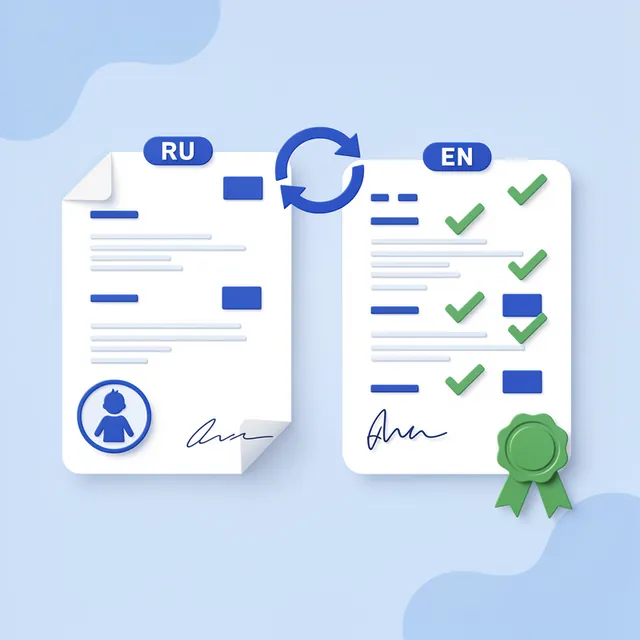
USCIS requires a full English translation of any document containing a foreign language. The translator must certify that the translation is complete and accurate and that the translator is competent to translate from the foreign language into English. For a Soviet-era birth or marriage certificate, a full translation covers every printed entry, stamp, seal and handwritten note.
What does USCIS require for a Soviet-era certificate?
The rule is in 8 CFR 103.2(b)(3). The document must come with a full English translation. The translator must certify the translation as complete and accurate. The translator must also certify competence to translate from the foreign language into English.
The rule applies to any document containing a foreign language. If the certificate is in Russian, Ukrainian or another language, a certified English translation goes with it.
For birth certificates, the USCIS Policy Manual (Volume 7, Part A, on adjustment of status) says that each foreign birth certificate must include a certified English translation.
What does the State Department say about Soviet-era documents from Ukraine?
The Department of State publishes a reciprocity schedule for each country. For Ukraine, it says that original civil documents issued or re-issued in Ukraine are accepted regardless of the country or date of issuance, whether from the USSR, Poland or Ukraine.
The translation of such a certificate is full, not summarized, as 8 CFR 103.2(b)(3) describes.
What is on the original, and what does the translation reproduce?
The layout of a certificate depends on the form used. A complete translation covers everything physically present on the document:
- The title of the document and any printed form number or series.
- The full name of the person (birth) or of both spouses (marriage), including surnames before and after marriage where they are shown.
- Dates and places, including the place of registration and the name of the civil registry office.
- The parents' names on a birth certificate. The Form I-485 instructions say USCIS will only accept a birth certificate which lists at least one parent.
- The registration entry number and the date of registration.
- The signature line and title of the official, with a note such as "[signature]" where a signature appears.
- Every round or rectangular stamp and seal, with its text translated and its position described.
- Handwritten notes, corrections and later marks added to the form.
How are dates, names and places shown?
Names are spelled in English letters as in the person's passport, so the certificate matches the identity document.
Dates are written so they cannot be misread, for example with the month spelled out.
Place names are translated as they appear on the certificate. If the form names a city or republic under its Soviet-era name, the translation keeps that name and does not replace it with a modern one.
How are the marriage date and the registration date shown?
The USCIS Policy Manual says that a marriage certificate should include the full names of the parties and the date the marriage actually occurred. It should also be timely registered with the appropriate civil authority after the ceremony, or show that it conforms to the legal requirements of the place of celebration.
A Soviet-era certificate may show one date for the marriage and another for the registration. Both appear in the translation, each labeled as it is labeled on the original.
What about bilingual forms and re-issued certificates?
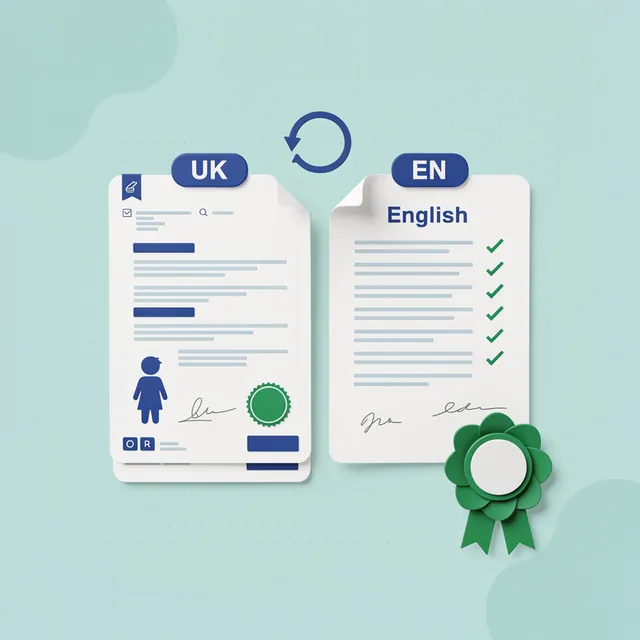
For Latvia, the State Department notes that the title of a Soviet-era document is normally given both in Russian and in Latvian. Where a certificate carries text in two languages, the translation covers every language version that appears on the document.
A certificate re-issued later by a civil registry office is translated as it reads. This includes any note that it was re-issued and the date of re-issue.
What must the translator's certification contain?
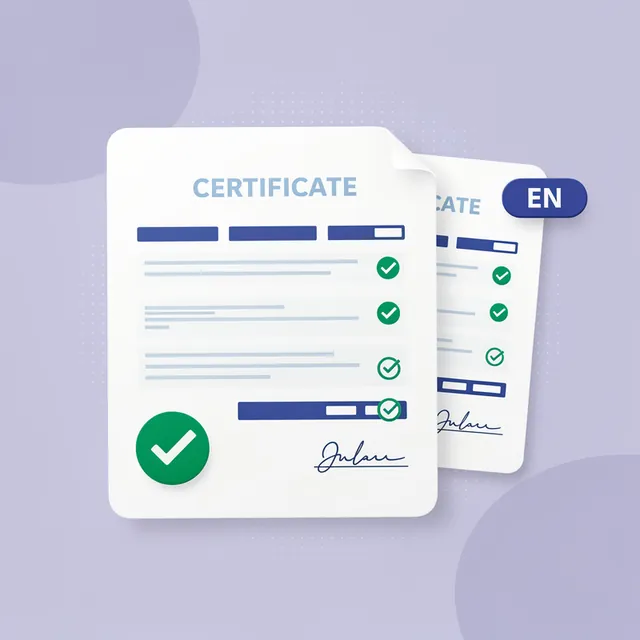
Under 8 CFR 103.2(b)(3), the certification states the following:
- 1The translation is complete.
- 2The translation is accurate.
- 3The translator is competent to translate from the foreign language (Russian or Ukrainian) into English.
In POVO's translations, the certification is a signed statement. It gives the translator's name, the date and contact details, and names the document it covers. Our sample certificate article shows how this page looks.
How POVO translates a Soviet-era certificate
Russian and Ukrainian into English, every page and stamp, names as in the passport, signed certification, one PDF, $23.70 minimum per document.
FAQ
Does a Soviet certificate in Russian need translation for USCIS?
8 CFR 103.2(b)(3) applies to any document containing a foreign language. The document must be accompanied by a full English translation and the translator's certification.
Does the State Department address certificates issued in the USSR?
For Ukraine, the State Department reciprocity schedule says original civil documents issued or re-issued in Ukraine are accepted regardless of the country or date of issuance, whether from the USSR, Poland or Ukraine.
Do both a birth and a marriage certificate need their own translation?
8 CFR 103.2(b)(3) covers any document containing a foreign language, so each certificate has its own translation and certification. The Policy Manual also says each foreign birth certificate must include a certified English translation.
What if the name on the certificate differs from the passport?
The translation follows the certificate. Names are spelled in English as in the passport, and any difference in the underlying names remains visible in the translated text.
Are stamps and handwritten notes translated?
Yes. A full translation reproduces stamps, seals, signatures and handwritten entries, with their text translated and their position on the page described.
Official sources
Links open the original publications this article restates.
- eCFR, 8 CFR Part 103, Immigration Benefit Requests (section 103.2, Translations)ecfr.gov
- USCIS Policy Manual, Volume 7, Part A, Chapter 4 - Documentationuscis.gov
- USCIS Policy Manual, Volume 6, Part B, Chapter 6 - Spousesuscis.gov
- USCIS, Form I-485 Instructions (Birth Certificate)uscis.gov
- U.S. Department of State, Reciprocity Schedule: Ukrainetravel.state.gov
- U.S. Department of State, Reciprocity Schedule: Latviatravel.state.gov
Documents from this article that POVO translates
- Marriage certificate: $35 per document
- Birth certificate: $35 per document
If you need your documents translated, always work with a certified translator.
POVO translates Russian and Ukrainian documents into English, with a signed certificate of accuracy. Upload the document, see the price and the date, pay when you are ready.