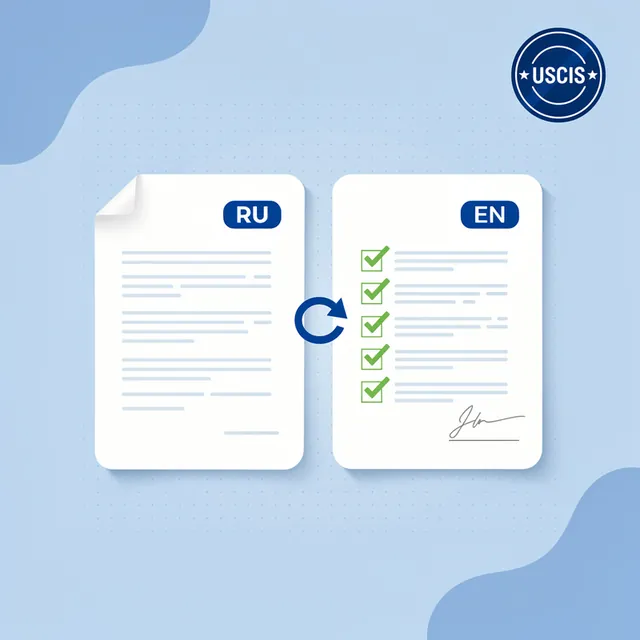

- A USCIS certified translation has two parts: the full English translation and a signed certificate of accuracy from the translator.
- USCIS gives the requirement in 8 CFR 103.2(b)(3) but no official template, so the certificate wording varies; the five elements do not.
- The translation mirrors the original: every field, stamp, seal, and handwritten note, in the same order, with untranslatable items described in brackets.
- Names are spelled as in the passport; dates are written out to avoid day and month confusion.
- The certificate is signed and dated by the translator and carries contact details so the officer can verify it.
A USCIS certified translation is one file with two parts: the complete English translation and a certificate of accuracy in which the translator states that the translation is complete and accurate and that they are competent in both languages, with name, signature, date and contact details. 8 CFR 103.2(b)(3) prescribes no form.
Two parts of one file
A certified translation prepared for USCIS is one PDF with two parts. The first part is the translation itself, page for page. The second part is the certificate of accuracy, a page where the translator states in writing that the translation is complete and accurate and that they are competent in both languages. The regulation that sets this requirement is 8 CFR 103.2(b)(3). It describes what the statement must confirm, but it does not prescribe a form, so the layout differs from one translator to another.
Part one: the translation page
The translation follows the structure of the original document so an officer can place the two side by side. A header names the document, for example Birth Certificate, Translation from Russian, and gives the series and number of the original. Each field of the original appears in the same order: names, dates, places, the issuing authority, the registration number. Nothing is summarized or left out.
- Stamps and seals are rendered as text in square brackets, for example [Round seal: Civil Registry Office of the Oktyabrsky District, City of Minsk].
- Handwritten entries are translated and marked [handwritten] where the distinction matters.
- Illegible fragments are marked [illegible] rather than guessed.
- Names are transliterated to match the spelling in the person's passport; if no passport exists yet, a standard transliteration is used and noted.
- Dates are written in full, for example 14 March 1987, to avoid day and month confusion between formats.
The back side of the document is translated when it carries anything: a stamp about citizenship, a note about an issued passport, an apostille. A blank back is noted as such.
Part two: the certificate of accuracy
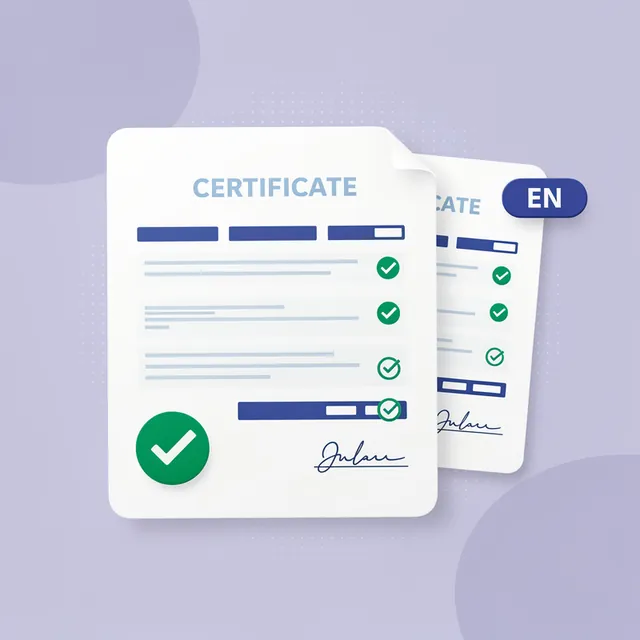
The certificate is a separate page that follows the translation. It contains five elements. Below is the wording POVO uses; other services word it differently, and USCIS accepts any wording that covers the same points.
- 1Title: Certificate of Translation Accuracy.
- 2Reference to the document: I, [translator's full name], certify that the attached document, a translation of a [type of document] issued to [name] on [date] in [country], is a complete and accurate translation of the original document from Russian into English.
- 3Statement of competence: I further certify that I am competent to translate from Russian into English.
- 4Signature block: translator's signature, printed name, date of signing.
- 5Contact details: company name, postal address, telephone, and email, so the receiving office can verify the certification.
Some translators add a line that the translation was prepared from a copy or a photograph of the original, which is accurate for online orders and does not affect acceptance. A notary block is not part of the certificate unless the receiving office asked for notarization.
What USCIS checks
An officer reviewing the packet looks for the English text of the whole document and for the translator's certification. The two most frequent problems in returned packets are a translation that skips stamps or the back side, and names spelled differently across documents. A missing certificate page is the third. None of these are about the quality of English; they are about completeness and consistency.
How to check a certified translation you received
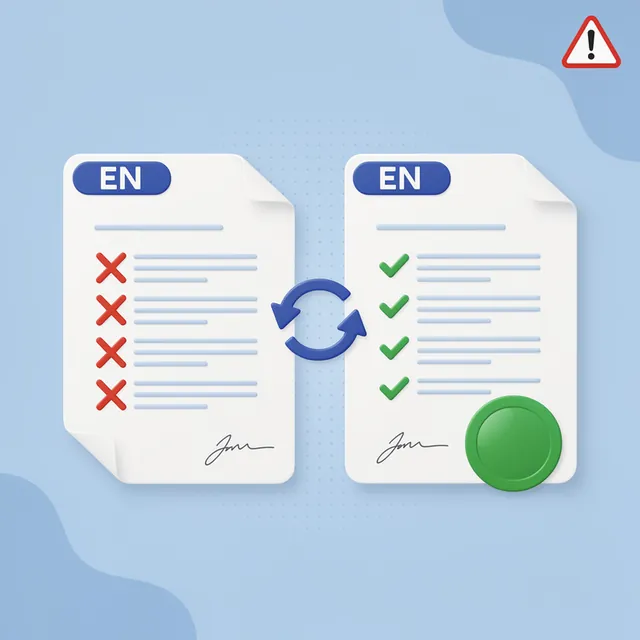
- Every field of the original has a counterpart in the translation, including seals, stamps, and the back side.
- Your name is spelled exactly as in your passport, and the same way in every translated document.
- The certificate page states both accuracy and competence, and names the document it refers to.
- The certificate is signed and dated, and the contact details are real and reachable.
- The file is a single PDF that can be uploaded or printed without editing.
FAQ
Does USCIS provide a certificate of translation form?
No. USCIS publishes the requirement in 8 CFR 103.2(b)(3) and in form instructions, but there is no official template. Any certificate that states completeness, accuracy, and competence, with signature and date, meets the requirement.
Does the certificate need a stamp or seal?
No. A signature, printed name, date, and contact details are sufficient. A company stamp is optional.
Should the translation copy the layout of the original?
It should follow the same order of fields so the officer can compare them. It does not need to reproduce the design.
Can the certificate cover several documents at once?
It can, if it names each document. POVO issues one certificate per document so that each file can be submitted on its own.
Is the certificate included in the price?
Yes. At POVO every translation, from $23.70 per document, comes with the signed certificate of accuracy.
Official sources
Links open the original publications this article restates.
If you need your documents translated, always work with a certified translator.
POVO translates Russian and Ukrainian documents into English, with a signed certificate of accuracy. Upload the document, see the price and the date, pay when you are ready.