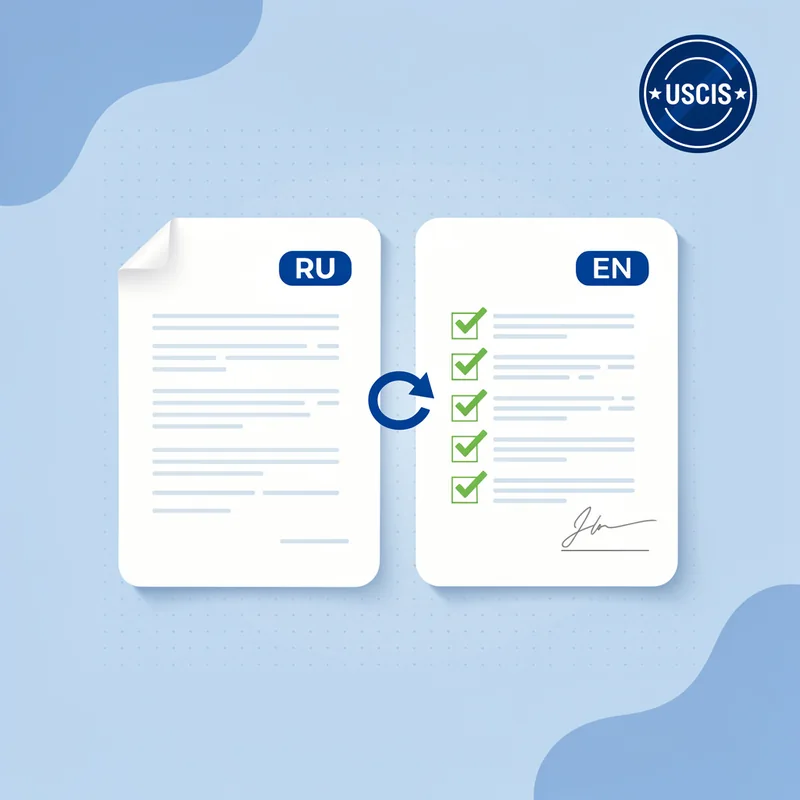

- USCIS rarely asks for a police certificate inside the US; consulates, employers and licensing boards are the usual requesters.
- Russian certificates come from the MVD on paper or as a Gosuslugi PDF with an e-signature; Ukrainian ones from the MVS on paper, through its portal or through Diia.
- The certificate has no expiry date; each office applies its own rule counted from the issue date.
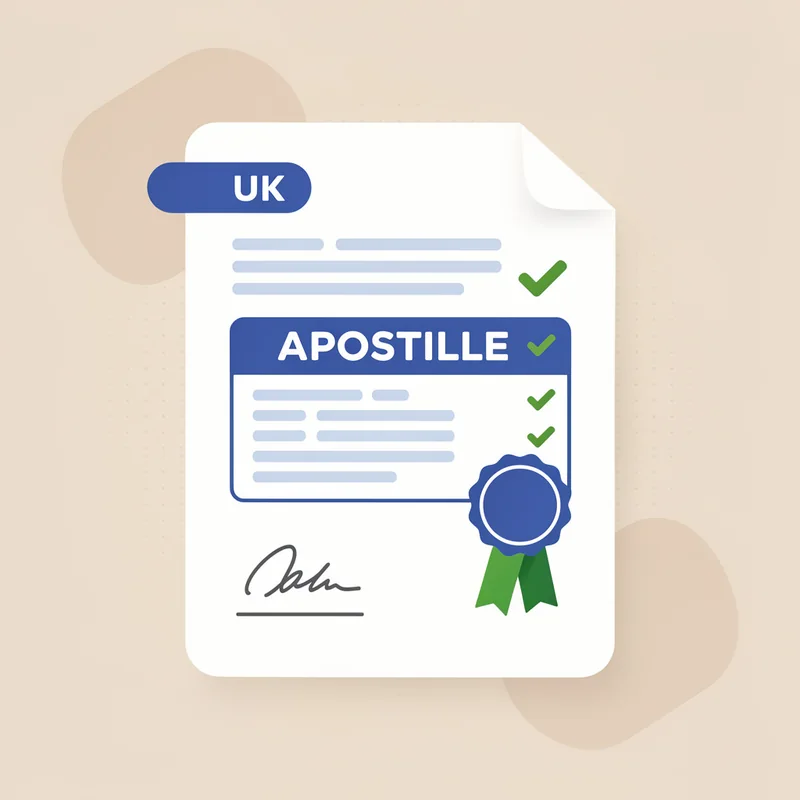
- Apostilles are placed by the MVD in Russia and by the Ministry of Foreign Affairs in Ukraine, and only on paper certificates.
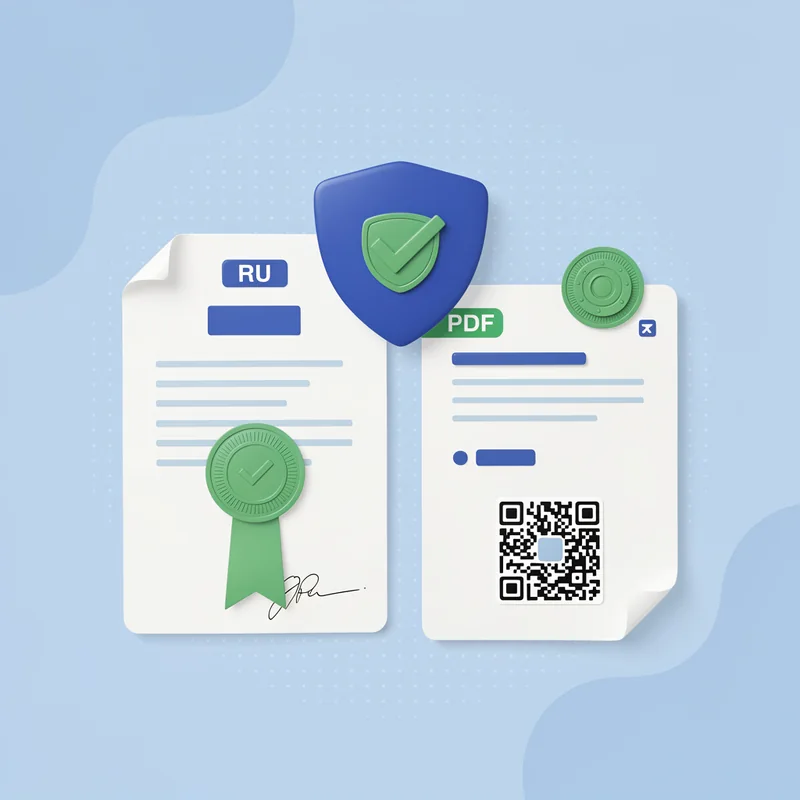
- QR codes and e-signature blocks are translated and described so the document stays verifiable.
A police clearance certificate, the certificate of no criminal record, is a short document with a long list of details that must come through in translation: every name you have used, the period checked, the exact wording of the result, the signature block, and often a QR code or an electronic signature. It also goes stale faster than most documents. Here is what to know before you request one in Russia or Ukraine and before you have it translated.
Who asks for it, and what they want to see
USCIS does not require a police certificate for most filings inside the United States; adjustment of status runs on fingerprints and its own background checks. Consular processing is different: the National Visa Center and US consulates ask for police certificates from countries where you lived for a certain period, and that is where most Russian and Ukrainian certificates end up. Employers, professional licensing boards, adoption agencies, some universities and some state agencies ask for them as well.
Whoever asks wants the same three things: the full text in English, including the result line word for word, a certification statement from the translator, and a clear issue date so they can apply their own validity rule. Employers sometimes add a fourth, a notarized copy, which is quoted separately when you tell us.
- Full name, all previous names and the dates they were used
- Date and place of birth
- The regions or the whole country checked, and the period covered
- The result line, translated exactly as written, never summarized
- Issue date, certificate number, signature block, seal or e-signature
Russia: the MVD certificate and the Gosuslugi PDF
In Russia the certificate is issued by the Ministry of Internal Affairs (MVD) through its information centers. There are two forms. The paper certificate is printed on a form, signed and stamped; you or a person with a power of attorney collect it at the MVD or a multifunctional center. The electronic certificate is requested through the Gosuslugi portal and delivered as a PDF signed with an enhanced qualified electronic signature. The PDF carries a signature stamp with the details of the signer, and sometimes a separate signature file.
Both are translated the same way. The signature stamp is translated, the note about the electronic signature is included, and the translation states that the source is an electronic document. If the office you are filing with insists on a paper original, ask the MVD for the paper form; printing the electronic version does not turn it into one.
The Russian certificate also carries a line about administrative offenses related to drugs and a line about criminal prosecution that was terminated. Both lines are translated as printed, even when they say there is nothing to report, because an office that knows the form looks for them.
Ukraine: the MVS certificate and the Diia version
In Ukraine the certificate is an extract from the record of persons brought to criminal liability, issued by the Ministry of Internal Affairs (MVS). It can be requested at a service center, through the MVS online portal, or through Diia, the government app. The Diia and portal versions are PDFs with a QR code that links to a verification page; the service center version is paper with a signature and a stamp.
Ukrainian certificates come in a full form that lists any record and a short form that states only whether a record exists. Ask the office which form it wants before you order. Newer certificates carry some field labels in English, but the body, the stamps and the signature block are Ukrainian only, and the whole document is translated.
Validity: the certificate has no expiry date, the office does
Neither the Russian nor the Ukrainian certificate prints an expiry date. Each receiving office applies its own rule, usually counted in months from the issue date, and the rules differ between consulates, licensing boards and employers. Some offices reset the clock if you returned to the country after the certificate was issued. Find out the rule of the office you are filing with before you request the certificate, so it does not expire while it waits in a queue.
Because the issue date is what an office checks, it is translated in the US date format and kept prominent in the translation. If you request a new certificate later, the new one is a new page and a new order; the translation of the old one is not updated.
Apostille: MVD in Russia, MFA in Ukraine
An apostille certifies the signature and seal on the certificate for use abroad. USCIS does not ask for it. Consular processing generally does not either, but some employers, boards and foreign offices do, so check before ordering. In Russia, apostilles on MVD certificates are issued by the MVD itself, through the information center that issued the certificate. In Ukraine, apostilles on MVS certificates are issued by the Ministry of Foreign Affairs. In both countries the apostille is placed on a paper certificate, so if you need one, request the paper form.
When an apostille is attached, it is translated on the same page as the certificate, with its number, date and the signing official's title. A certificate with an apostille is usually two pages: the certificate and the apostille sheet, and the count is shown with your quote before you pay.
QR codes, e-signatures and how the translation shows them
Electronic certificates verify themselves: the QR code opens a government page that confirms the document, and the e-signature stamp names the signer and the certificate used. The translation keeps that verifiability visible. The QR code is reproduced as an image and described, the text around it is translated, and the electronic signature block is translated with the names and dates. The translation states that the original is an electronic document, so a reader is not surprised by the lack of an ink signature.
One PDF comes back to you: the translation, the signed certificate of accuracy, and a copy of the original. If the office wants to verify the certificate itself, the QR code in the copy of the original still works.
What USCIS and employers ask for
When USCIS does ask, in a request for evidence or at an interview, it wants the certificate in full with a signed translator's statement that the translation is complete and accurate. That is the certified translation you receive with every order. Employers and boards usually want the same, and some add notarization or ask that the translation be mailed on paper. Both are quoted separately when you tell us, and neither changes the translation itself.
- 1Ask the receiving office which form (paper or electronic, full or short) and which validity rule applies.
- 2Request the certificate from the MVD, Gosuslugi, the MVS or Diia, and the apostille if the office requires it.
- 3Upload the PDF as received, or clear photos of the paper certificate and the apostille.
- 4Give us the Latin spelling of your name from your passport and any previous surnames.
- 5Confirm the page count and the delivery date on the quote, then pay.
A one-page certificate is usually the $23.70 minimum, certification included, and is usually ready the next business day; the date is confirmed before you pay.
FAQ
Can an electronic certificate from Gosuslugi or Diia be translated?
Yes. The signature block and the verification text are translated, the QR code is reproduced, and the translation notes that the original is electronic. Ask the office first whether it accepts the electronic form.
Does the translation expire with the certificate?
No. The office's validity rule applies to the certificate's issue date, not to the translation. If you request a new certificate, it is translated as a new order.
My certificate lists my maiden name. Is that a problem?
It helps. It shows the check covered every name you have used. Each name is transliterated to match your passport and your other documents.
If you need your documents translated, always work with a certified translator.
POVO translates Russian and Ukrainian documents into English, with a signed certificate of accuracy. Upload the document, see the price and the date, pay when you are ready.