
- The U.S. Department of Education says regulated professions are generally licensed at the state level, by the licensing board where you intend to work.
- The Department of Education also says credential evaluation services generally require English translations of any non-English documents.
- A complete translation covers every page, stamp, seal, number and handwritten entry of the original.
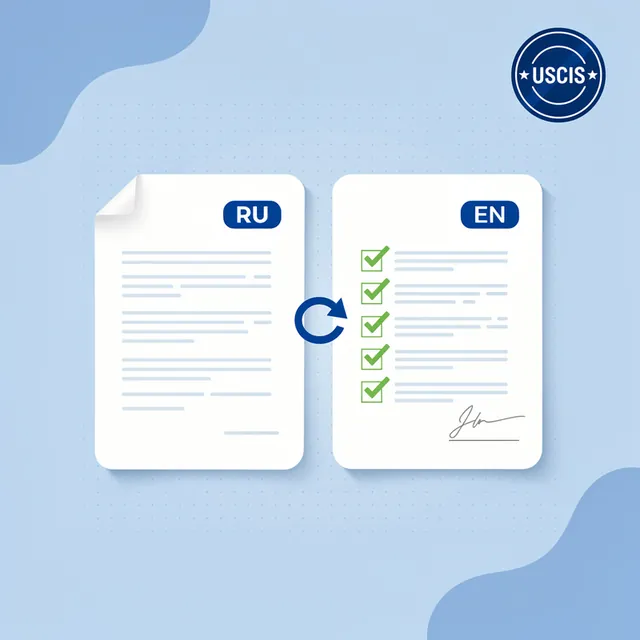
- Under 8 CFR 103.2(b)(3), a foreign language document submitted to USCIS needs a full English translation that the translator has certified as complete and accurate.
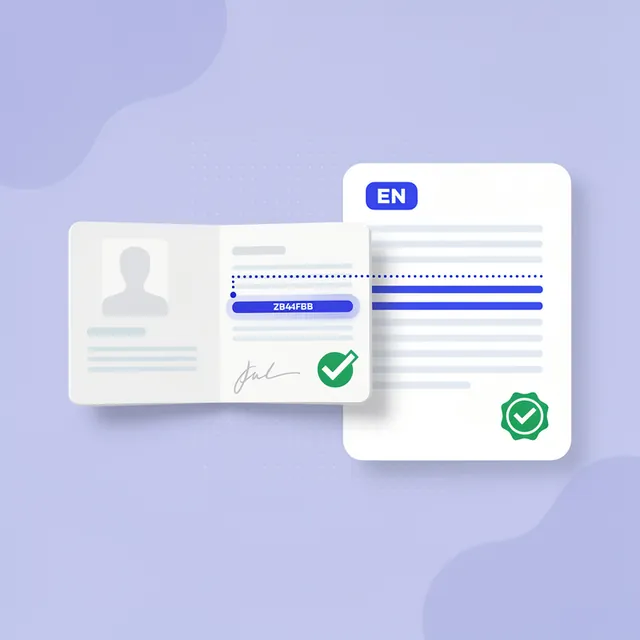
- The name in the translation follows the international passport.
The U.S. Department of Education states that regulated professions in the United States are generally licensed at the state level. It also states that credential evaluation services generally require English translations of non-English documents. A complete translation reproduces every page, stamp, seal, number and handwritten entry of the original and carries a signed translator's certification.
Who decides what a licensing board needs?
The U.S. Department of Education states that the competent authority for recognizing previous education and qualifications for a licensed profession is the appropriate state licensing board in the jurisdiction where you intend to work.
In some states, licensing boards have specific procedures for evaluating and recognizing foreign qualifications. Depending on the board and the profession, the evaluation is done by the board, by a general credential evaluation service or by a specialized one. The Department of Education states that the relevant state licensing board is the authoritative source of information on evaluating foreign credentials.
What is on a Russian or Ukrainian license or qualification certificate?
Professional documents from Russia and Ukraine differ by profession. A license or qualification certificate often shows entries such as these, and each one belongs in the translation:
- The name of the issuing authority, ministry, commission or institution, often in a header or round seal.
- The holder's full name, date of birth and sometimes the patronymic.
- The profession, specialty, qualification or category, and the document's series and number.
- Dates of issue, of any decision or order, and of any validity period or renewal.
- Signatures, titles of officials, and printed or embossed seals.
- Handwritten entries, corrections and inserted stamps, including re-registration or category marks on later pages.
- Photo, reverse side and attached inserts, if the document has them.
How should the translation look?
The translation follows the original page by page. Printed text, stamps and seals are translated or described in square brackets, for example [round seal: name of the issuing authority]. Illegible or handwritten parts are marked as such instead of being skipped.
Numbers, dates and series codes are copied exactly as written. If a document has two languages, both are rendered. The reverse side is included even when it is blank, with a note that it is blank.
For documents submitted to USCIS, 8 CFR 103.2(b)(3) requires a full English translation that the translator has certified as complete and accurate, together with the translator's certification that he or she is competent to translate from the foreign language into English. The USCIS Form I-693 instructions state that the translator's certification must include the translator's signature, printed name, the signature date and the translator's contact information.
How do evaluations and translations fit together?
The U.S. Department of Education states that in most instances the competent authorities, which include state licensing authorities, request a credential evaluation. The evaluation determines how non-U.S. credentials compare with U.S. credentials. Evaluations are carried out by private, non-governmental entities for a fee.
The California Department of Public Health, Laboratory Field Services, gives an example. Its transcripts page states that all non-U.S. transcripts must be evaluated by an approved evaluation service. It also states that an official transcript from the university is required in addition to the evaluation.
Credential evaluation services generally require English translations of any non-English documents. The translation supplies the English text that the evaluator reads.
Names and details in the translation
The same California page states that applicants whose education, training or experience is from a non-U.S. school, college, university or clinical laboratory need their name printed in English on all transcripts and supporting documents, matching the name on the application.
- 1The English spelling of the name follows the international passport.
- 2The same spelling is used on the license, the diploma, the transcript and every other translated document.
- 3If a name changed after marriage, the translation shows the name written on each document as issued. Name change documents are translated separately.
- 4Dates are written in a clear, unambiguous format, such as with the month spelled out.
Nurses and other health care workers on the immigration side
USCIS describes an alternative certification process for nurses. A foreign nurse may present a certified statement from the Commission on Graduates of Foreign Nursing Schools (CGFNS) or an approved equivalent independent credentialing organization.
USCIS lists what that statement must verify: a valid and unrestricted license in the state of intended employment, intended employment in a state that verifies that foreign licenses are authentic and unencumbered, passage of the NCLEX, and graduation from certain English language nursing programs. Under 8 CFR 103.2(b)(3), any foreign language document submitted to USCIS must be accompanied by a full English translation with the translator's certification.
How POVO translates professional licenses and qualification certificates
Russian and Ukrainian into English, every page and stamp, names as in the passport, signed certification, one PDF, $23.70 minimum per document.
FAQ
Does every US licensing board require a certified translation?
The U.S. Department of Education says the relevant state licensing board is the authoritative source of information on evaluating foreign credentials. It also says credential evaluation services generally require English translations of non-English documents. For documents submitted to USCIS, 8 CFR 103.2(b)(3) requires a full English translation with the translator's certification.
Is a credential evaluation the same as a translation?
No. An evaluation determines how non-U.S. credentials compare with U.S. credentials and is carried out by a private, non-governmental entity for a fee. The Department of Education says such services generally require English translations of non-English documents.
Should stamps and handwritten notes be translated?
A complete translation reproduces them. Stamps and seals are translated or described in brackets, and handwritten entries are rendered or marked as illegible.
What does the translator's certification contain?
Under 8 CFR 103.2(b)(3), the translator certifies that the translation is complete and accurate and that he or she is competent to translate from the foreign language into English. The USCIS Form I-693 instructions say the certification includes the translator's signature, printed name, signature date and contact information.
Which name spelling appears in the translation?
In a POVO translation, the English spelling follows the international passport. The California Department of Public Health, Laboratory Field Services, states that the name on supporting documents must match the name on the application.
Official sources
Links open the original publications this article restates.
- U.S. Department of Education, Recognition of Foreign Qualificationsed.gov
- California Department of Public Health, Laboratory Field Services: Transcriptscdph.ca.gov
- USCIS, Health Care Worker Certificationuscis.gov
- eCFR, 8 CFR 103.2 Submission and adjudication of benefit requests (translations)ecfr.gov
- USCIS, Form I-693 Instructions (Translations)uscis.gov
Documents from this article that POVO translates
- Diploma: $25 per page
- Transcript / diploma supplement: $25 per page
If you need your documents translated, always work with a certified translator.
POVO translates Russian and Ukrainian documents into English, with a signed certificate of accuracy. Upload the document, see the price and the date, pay when you are ready.